Wedding Tips
SIAE for Weddings in Italy: Costs and Who Applies for the Licence?
What SIAE is, how much a wedding music licence costs in Italy and who needs to apply: a practical guide to getting the paperwork sorted before the party.
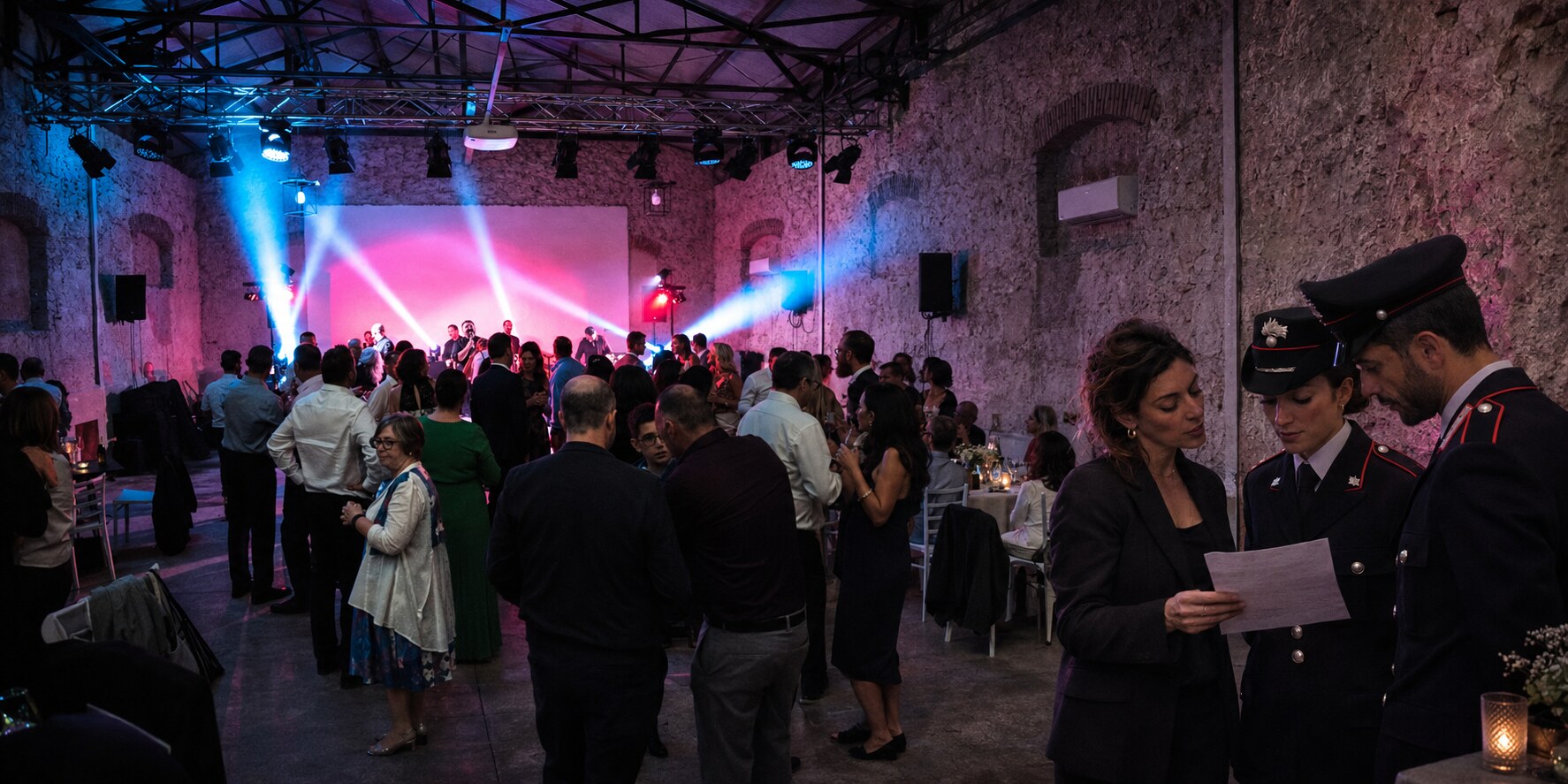
You have chosen your venue, found your band and started debating the first dance song. Your wedding schedule is nearly ready, even if the file called “final” has already been renamed three times.
Then someone asks: “Who is sorting out SIAE?”
It is one of those details that can slip past you among the quotes and preparations. Clarifying it early is enough to avoid confusion, misunderstandings and last-minute paperwork.
If you are using music to entertain guests at your wedding reception in Italy, you will need to obtain a SIAE licence before the party. The licence covers the use of music from the repertoire represented by SIAE at your event.
Here is what you are paying for, how much it costs and who needs to apply.
1. What is SIAE and why do you pay it for a wedding in Italy?
SIAE stands for Società Italiana degli Autori ed Editori. It protects copyright and collects and distributes the royalties due to the authors and publishers whose works it represents.
If you are planning a wedding in Italy from abroad, a comparison may help: SIAE plays a similar role to IMRO in Ireland, PRS for Music in the UK, ASCAP and BMI in the United States, APRA AMCOS in Australia and SOCAN in Canada. Procedures vary between countries, but the principle is to pay the people who create the music.
You will often hear people call it the “SIAE tax”. In practical terms, it is an expense to include in your reception budget; more precisely, though, you are paying for a licence to use protected music, rather than a government tax.
The most useful distinction to remember is this:
- The band or DJ’s fee pays for the music service.
- The SIAE licence covers the rights to the songs used during your party.
These are two costs with different purposes. Paying the musicians does not mean you have already paid the royalties for the songs they will perform.
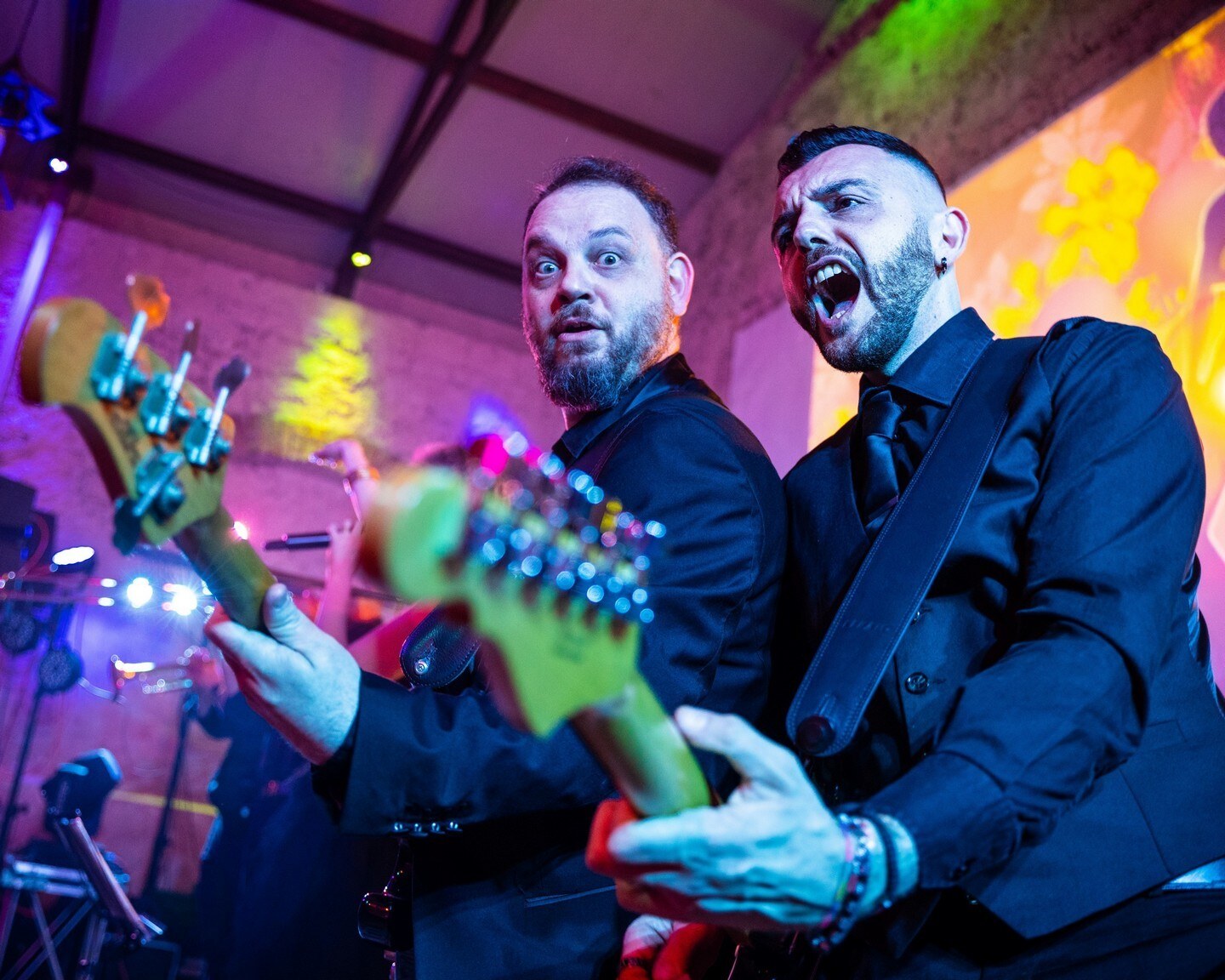
© The Gloves
2. How much does a SIAE wedding licence cost?
The cost mainly depends on how many guests are attending and the type of music planned: live, recorded or both.
The rates published by SIAE, checked on 10 November 2026, are as follows:
| Music planned | Fewer than 200 guests | More than 200 guests |
|---|---|---|
| Live music only | €272.58 | €412.63 |
| Recorded music | €384.73 | €582.75 |
| Live and recorded music | €384.73 | €582.75 |
These amounts include VAT and administrative processing fees. If you have exactly 200 guests, enter the actual number in the portal and check the quote: the information page describes the bands as “fewer than” and “more than” 200.
Band, DJ or sax with a DJ: which option should you choose?
Start with the music that will actually be played:
- Entirely live entertainment: choose the live music option.
- DJ: choose recorded music.
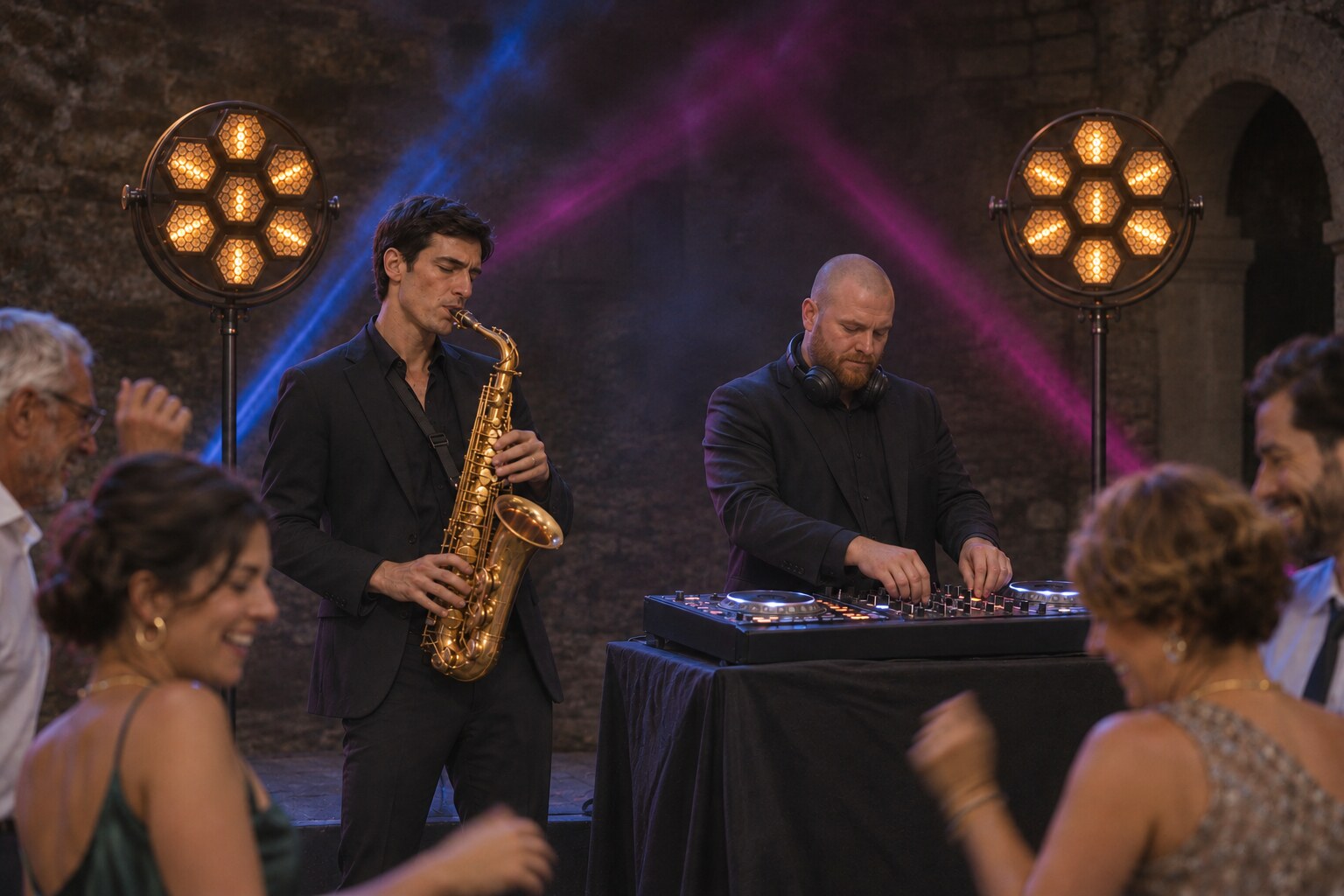
- DJ accompanied by live saxophone, vocals or other instruments: choose live and recorded music.
- Band followed by a DJ set: the licence needs to cover both.
Having live instruments does not remove the recorded music component used by the DJ. The same applies if the DJ set is short or is supplied by the same company as the band.
Before completing the application, ask your supplier one simple question: “Will recorded music also be used during the service?” Their answer will help you choose correctly.
Why does the price increase? Recorded music involves related rights as well as copyright royalties. These also go to the producers of the recordings and the artists who performed on them.
3. Who needs to apply for the SIAE licence?
The person organising the wedding is responsible for applying, usually one of the couple. The licence is tied to the organiser and the details declared for that particular event.
Your wedding planner or venue manager may agree to handle the application on your behalf as part of their planning and coordination work. However, this is a service you need to agree on: it may be offered as a professional courtesy or included in their brief, but you should not take it for granted.
Clarify who will collect the details, who will submit the application and whose name will be on the licence. If someone is acting on your behalf, check the correct arrangements with the SIAE office. SIAE provides an authorisation procedure for applications handled at its offices.
One practical detail: the Portale Feste Private is for private individual accounts, not business accounts belonging to wedding planners or venues. Getting help from a professional does not automatically mean the licence should be issued in their name.
What is the band’s role?
To understand who does what, it helps to distinguish three roles:
- The organiser: coordinates the event and applies for the licence.
- The music coordinator (direttore d’esecuzione): is the musical point of contact, such as the band or musicians’ coordinator.
- The performer: is whoever performs, such as the band, an individual musician or the DJ.
Where a music programme is required, the music coordinator handles the list of songs performed. Private parties, including weddings, currently do not require a borderò, the form listing the music used.
The band can help you work out which type of music to declare, but it will not necessarily have all the latest event details. Your final guest count, for example, may change while the musicians are still waiting for the running order.
That is why the music service and the SIAE licence should be treated as two separate items. Clarify who will handle the application and its cost when you receive the quote.
If your quote says “SIAE included”
Ask how it will be handled and request a copy of the issued licence.
In particular, check:
- the licence holder’s name;
- the date and venue;
- the number of guests;
- the declared timings;
- the type of music planned.
These details form part of the application and can be checked on the document.
An application for 50 people does not describe a reception for 250. Similarly, a party with a band and a DJ needs to be declared in line with the actual programme. The advice is simple: stay involved, even when someone else is handling it for you.
Any SIAE background music subscription held by the venue is also separate from the licence for your wedding.

4. How to apply and what to check before the party
You can apply online through the official SIAE website, using the Portale Feste Private, its private parties portal.
It is worth starting once you have confirmed your venue, music programme and guest count, leaving time to resolve any questions.
The process follows these steps:
- Create a private individual account or sign in to the online services.
- Open the Portale Feste Private and start a new application.
- Find your reception venue.
- Enter the wedding details, including the date, timings, guest count and how music will be used.
- Check the summary and complete the payment.
- Download and keep the licence and invoice.
If you would prefer assistance, you can contact the SIAE office responsible for the area where your event will take place. The website also offers the virtual assistant EVA for support enquiries.
Once you have the document, share it with whoever is coordinating the reception and agree who will keep it available during the party. If the programme changes, ask SIAE how to update the application: it is easier to deal with a change before the event than explain it during an inspection.
What happens if you do not have the licence?
Using protected music without the necessary permission may lead to disputes and financial claims, including compensation for damage. Italian law allows this to be calculated by reference to the royalties that would have been payable for authorised use.
It is therefore something to arrange properly, rather than leave to chance and hope to sort out after the party.
The consequences depend on the irregularities found: there is no single automatic outcome that amounts to “an inspector arrives and the wedding is over”. Having the correct documents means you can face any inspection with the relevant information already to hand.
Remember, too, that the music licence concerns the rights to the songs: you need to check the venue’s permitted hours and noise rules separately.
SIAE and INPS agibilità, often called “ex ENPALS”: two different documents
When you go through the arrangements with your band or DJ, ask which documents they will give you before the wedding.
The SIAE licence covers the music used. The INPS certificato di agibilità, often called “ex ENPALS”, concerns the employment of entertainment workers at that specific event, in cases where it is required.
It is a requirement linked to the work of artists and technicians and their social security contributions. It is not a general qualification to work as a musician, and paying SIAE does not replace it.
For you as a couple, the useful question is: “For the service we have booked, which requirements apply and who is responsible for them?” Discussing this before the wedding helps clarify responsibilities and documents without turning you into experts in Italian paperwork.

Paperwork first, dance floor next
Sort out this part alongside your music programme. When it is time to hit the dance floor, the licence can stay in your documents folder. You will have other things to do.
Join the party!
Got a question or something to share? Grab the mic and drop us a comment!
Loading comments…