
Wedding Tips
How to Choose Ceremony Music and Musicians for Your Wedding in Italy
Church organ or garden strings? Solo pianist, expressive duo or full quartet? Here is how to choose ceremony musicians who suit your setting, repertoire and budget.
Your ceremony music has a surprisingly tricky job. It needs to heighten one of the most emotional parts of the day without charging into the spotlight wearing a feather boa.
And choosing it involves more than collecting songs you both love. For a destination wedding in Italy, the ceremony setting, permitted repertoire, instruments, musicians, logistics and budget all need to play nicely together. Once you understand what each instrument actually contributes—not just how lovely it looks beside the flowers—the right line-up becomes much easier to hear.
1. Let the Type of Ceremony Make the First Call
Begin with the big distinction: are you having a religious ceremony in a church, or a civil or symbolic ceremony in a garden or another part of your venue? That decision affects both the repertoire you can use and the musicians who make sense.
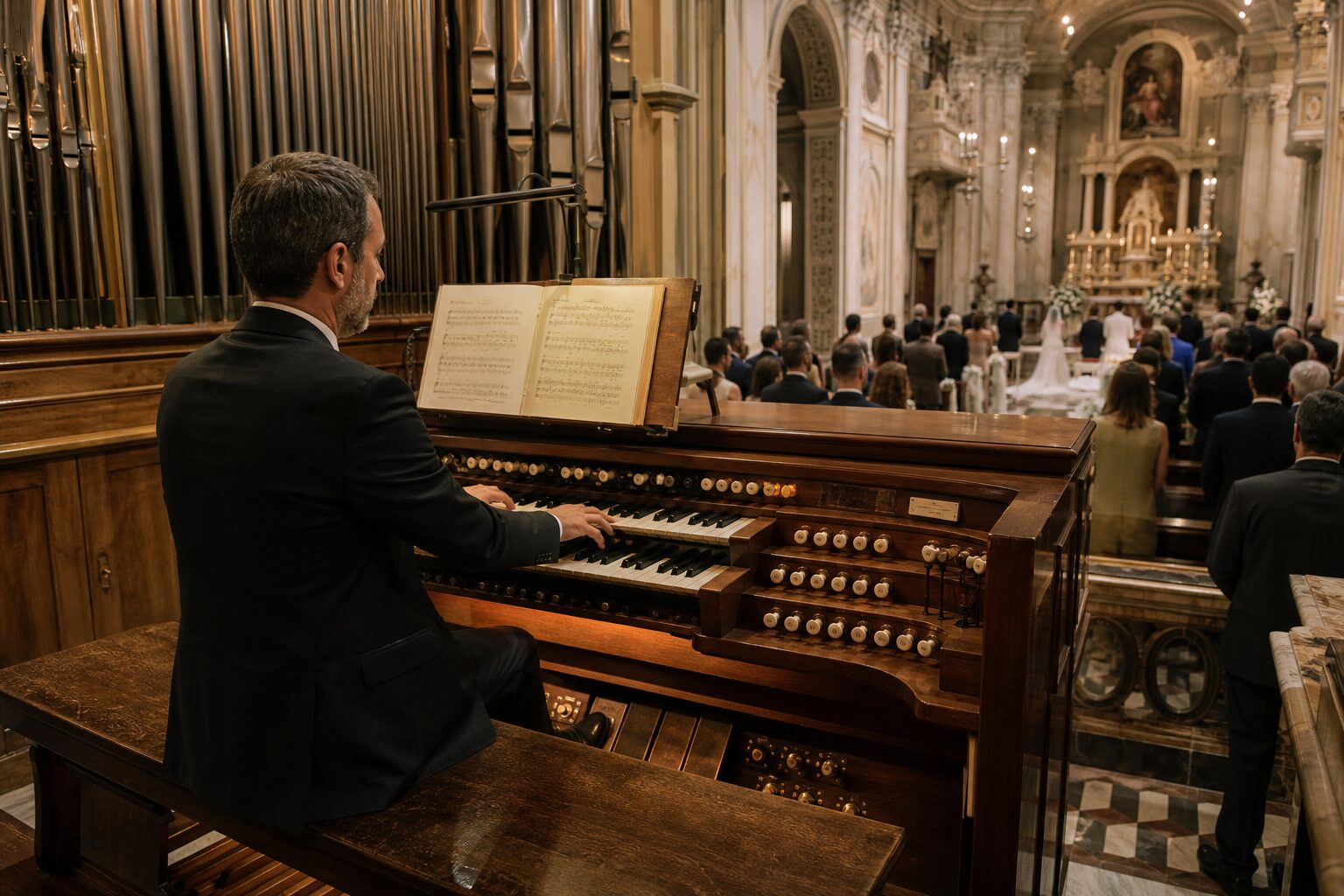
Church ceremonies generally favour sacred, classical or otherwise appropriate music, and the church or celebrant may provide specific guidance. Check what is permitted before falling completely in love with your programme. Discovering that your chosen entrance song is not allowed is far less amusing during a frantic email exchange three weeks before the wedding.
If the church has a traditional pipe organ, an experienced organist is a natural option. The organ can perform alone or accompany a violin, while a tenor or soprano can bring extra solemnity to sacred or classical pieces. Alternatively, you can leave the organ out and use a self-contained formation such as harp and violin or a string quartet. These ensembles already create a complete musical texture, so they are usually alternatives to the organ rather than additions to it. More musicians do not automatically mean more magic; sometimes they simply mean more music stands.
For the procession itself, our guide to choosing a bridal entrance song explains how setting, timing and ceremony type shape the choice.
2. Use the Freedom of an Outdoor Ceremony Wisely
Civil and symbolic ceremonies held outdoors normally give you much more musical freedom. Alongside classical pieces, you can consider arrangements of contemporary songs, film scores or music with a personal connection to the two of you. Yes, that can include a favourite screen theme—provided it still works as ceremony music and does not make your entrance feel like the opening credits.
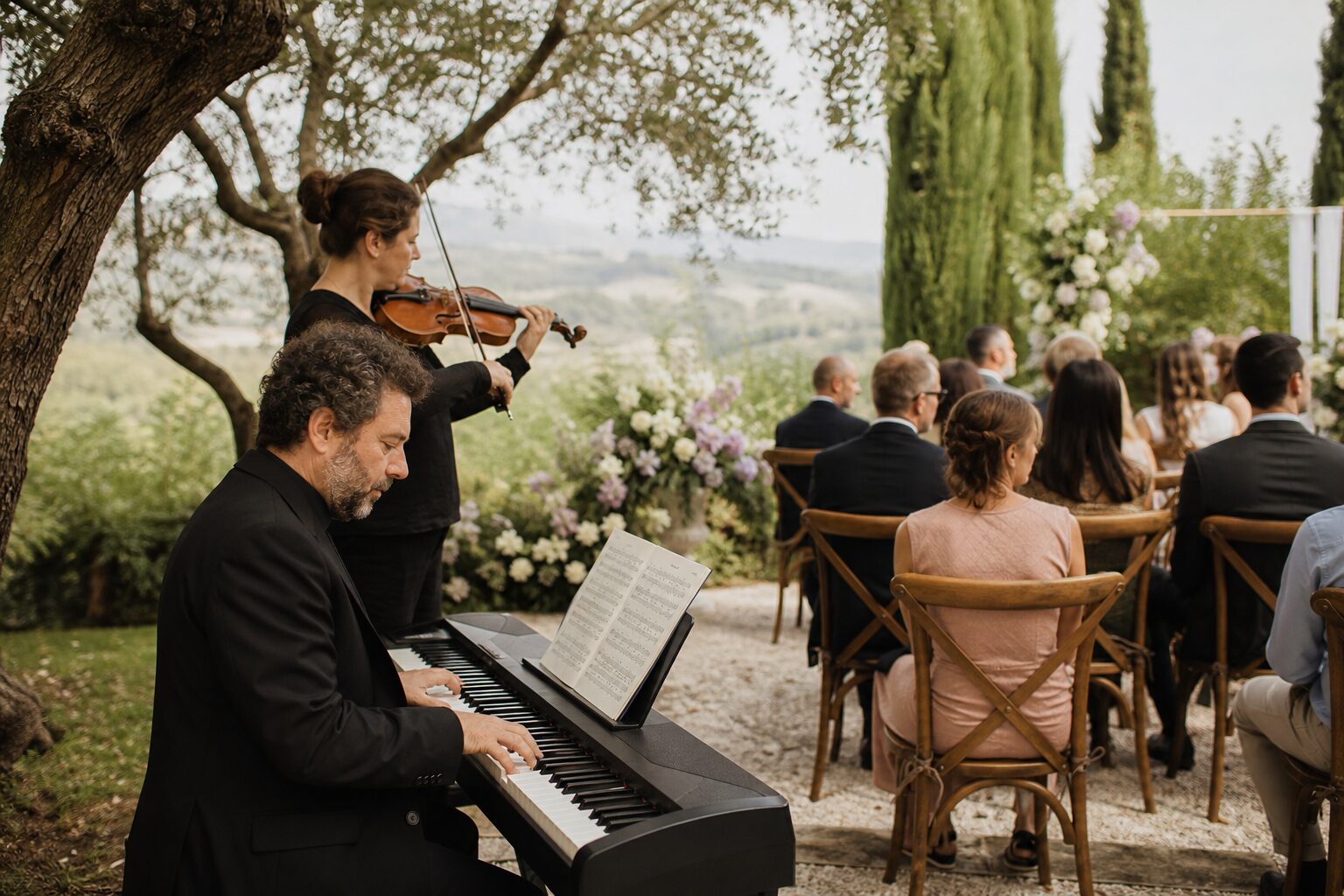
Unlike a church, however, a garden will not usually have an instrument waiting patiently in the corner. You may need to bring in a professional digital piano or choose a self-contained duo or ensemble. The desired atmosphere and available budget matter, but so does the practical set-up.
A piano-led formation can move comfortably between classical works, modern songs and soundtracks, while strings can give familiar music a more lyrical character. Rather than squeezing every favourite into the ceremony, decide on a coherent musical direction and choose musicians who can arrange and perform that repertoire convincingly. Personal is wonderful. Random musical tapas, less so.
3. Understand Melody and Harmony Before Choosing a Line-Up
Here comes a little music theory, but we promise not to produce a blackboard. Instruments such as violin, flute and oboe mainly carry melody: the recognisable line you might hum afterwards. For an arrangement to sound full, that melody will usually need harmonic support underneath it.
Harmony is the combination of notes and chords that gives music its body. This is why a violin is so often paired with piano, organ, harp or, in some styles, guitar. A solo violin, a violin with piano and a full string ensemble are not simply small, medium and large versions of one idea. They create genuinely different musical experiences.
Piano and violin demonstrate the relationship beautifully. A pianist can provide harmony, accompaniment and melody at the same time, while the violin adds an expressive melodic voice above it. An organ can perform a similar role in church. When comparing line-ups, listen to the complete sound rather than choosing an instrument purely because it photographs beautifully. We adore a handsome violin, but it still needs a musical plan.
4. Compare Soloists and Duos with Logistics in Mind
If you want one musician, a pianist is among the most versatile choices. In a church, a keyboard player with suitable organ experience may use the instrument already there; outdoors, a professional digital piano can fulfil the same musical role. One player can cover a broad repertoire while providing complete harmonic accompaniment—a tidy little musical multitasker.
Adding a violin is an effective next step. Piano and violin can handle classical music, contemporary songs and soundtracks, with the piano building the structure and the violin adding colour, expression and a more lyrical quality.
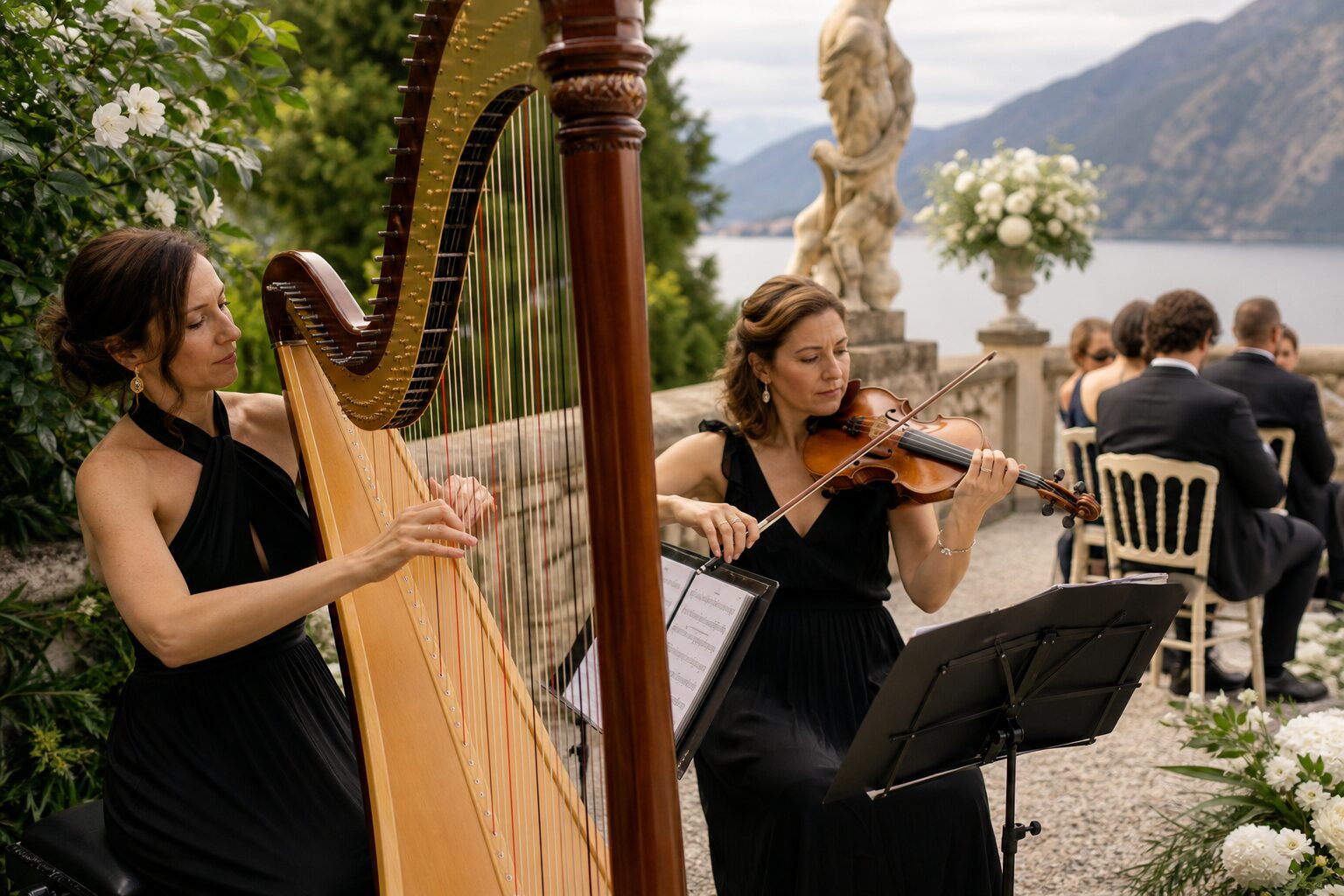
Harp and violin offer another complete duo. The harp supplies harmonic support while the violin carries the melody, creating a delicate and distinctive sound. The practical side deserves attention too: a harp is fragile, bulky and complicated to transport and position. That usually makes the formation more costly than a simpler set-up. If you love this combination, discuss access, placement and budget early. Harps are heavenly, but sadly they do not float themselves up stone staircases.
5. Know When a Quartet—or a Classical Voice—Fits
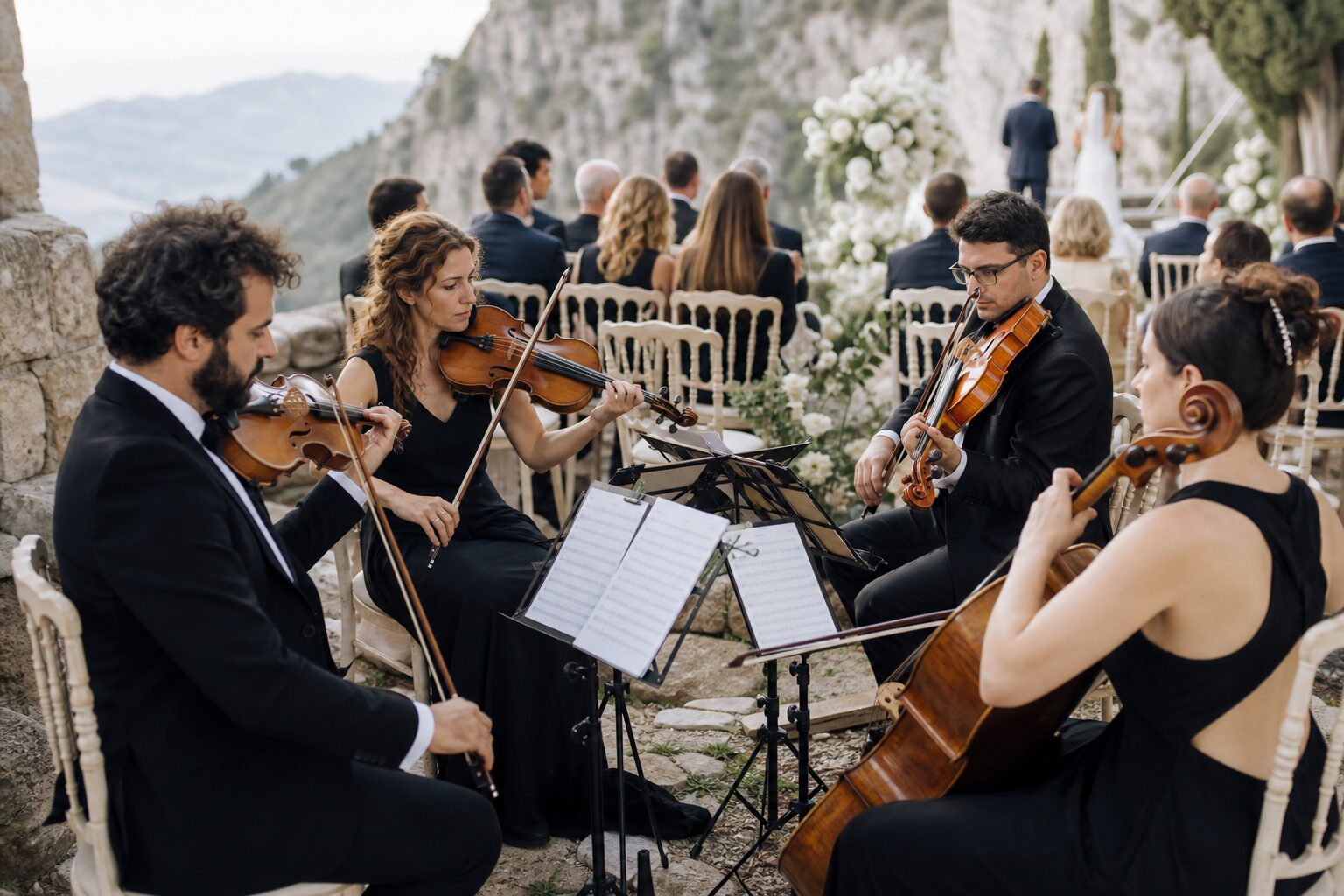
A string quartet is a strong choice when you want a complete, layered sound without a piano. The standard formation of two violins, viola and cello allows four musicians to divide melody, harmony, inner parts and bass between them. That creates rich arrangements of classical works as well as modern songs.
Think of the quartet as one complete musical structure, not simply four soloists sharing a corner. Compared with a solo violin or piano-and-violin duo, it produces a fuller and more intricate texture. It also takes a larger share of the ceremony budget, so the decision should be based on the sound and atmosphere you want—not on an imaginary wedding rulebook insisting that four bows are compulsory.
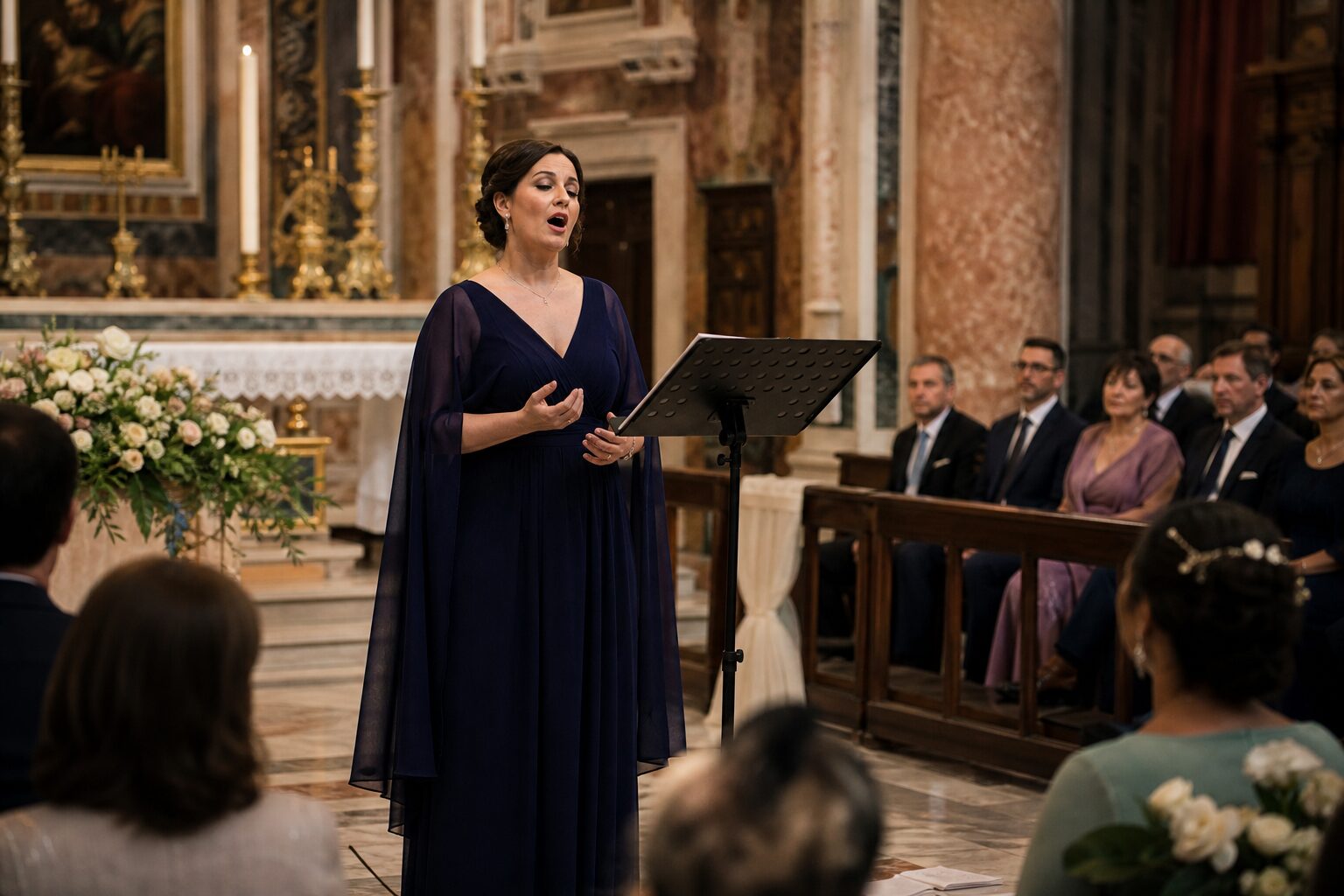
Tenors and sopranos require a slightly different decision. Their natural repertoire includes many sacred, classical and traditional works, often with religious texts, making them particularly suitable for church ceremonies. They are generally less aligned with symbolic garden ceremonies, where couples often prefer contemporary music and a less liturgical character. Add a classical singer because that voice genuinely belongs in your ceremony, not simply because one more dramatic ingredient sounds tempting.
Build the Music Around the Ceremony You Actually Want
There is no perfect line-up for every wedding. A pianist offers flexibility; piano and violin add expressive depth; harp and violin bring a delicate character; a quartet creates a rich, complete texture; and a tenor or soprano can give a church ceremony real solemnity.
The right choice brings your setting, repertoire, instrumentation, logistics and budget into the same conversation. Do that, and the music will feel completely connected to your ceremony—emotional when it should be, beautifully balanced and unmistakably yours.
Make Your Ceremony Sound Like You
Already have every song mapped out, or still somewhere between “we love everything” and “where do we even start?” Tell us the atmosphere you want and we’ll help you find the right mix of musicians, instruments and songs. No conservatory exam required.
Tags
- Ceremony Music
- Church Weddings
- Live Musicians
- Music Planning
- Outdoor Ceremonies
- String Music
- Symbolic Ceremonies
- Wedding Repertoire
Join the party!
Got a question or something to share? Grab the mic and drop us a comment!
Loading comments…